
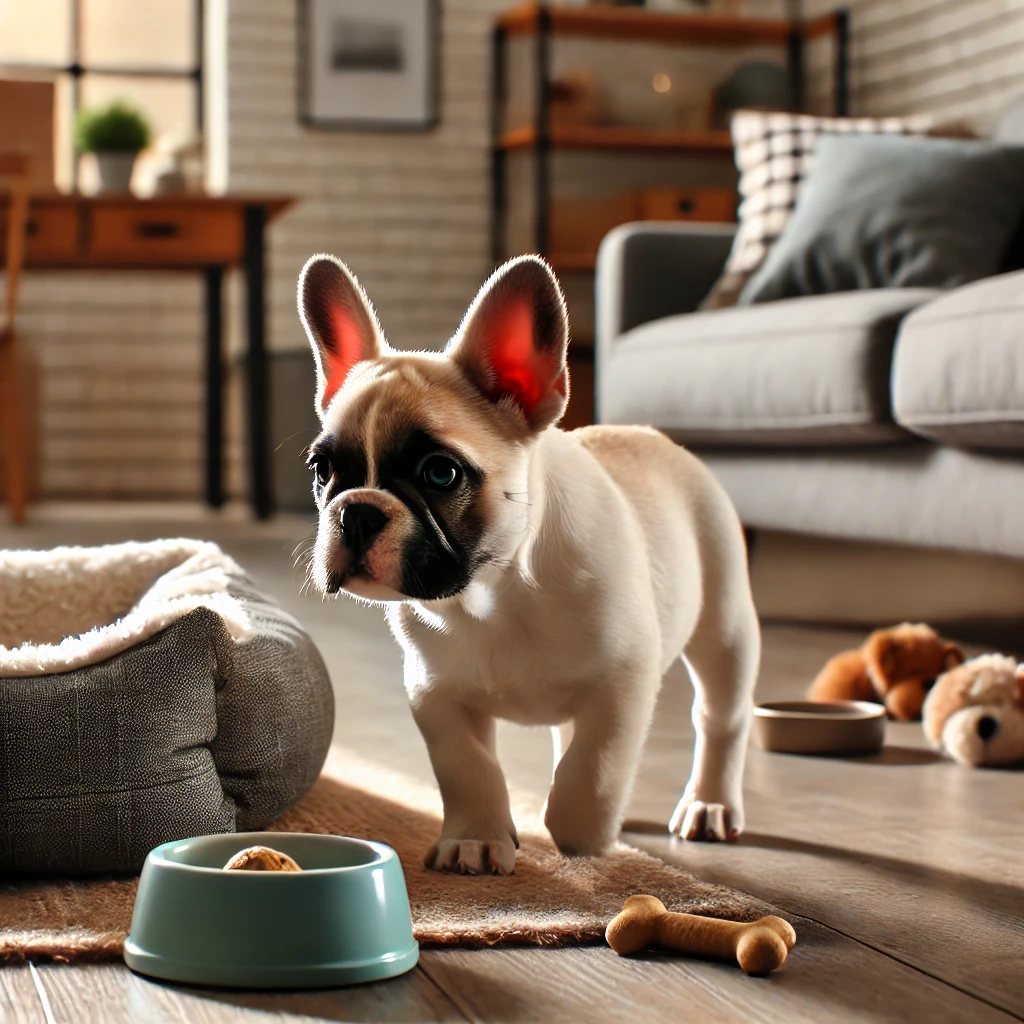
Bringing a French Bulldog into a new home—whether as a puppy, an adopted adult, or a recent move—marks a major transition in their life. While Frenchies are adaptable and affectionate, they are also sensitive and thrive on familiarity. A sudden change in environment can cause stress, anxiety, and confusion.
With the right preparation and approach, you can help your French Bulldog feel safe, confident, and settled in their new space.
1. Prepare the Environment Before Arrival
Before your Frenchie sets a paw in your home, have their space ready.
Must-haves:
- A designated quiet area with a cozy bed or crate
- Food and water bowls in a low-traffic location
- Toys for comfort and entertainment
- Gates or barriers to restrict access to unsafe zones
Avoid overwhelming them by giving access to the entire house immediately. Start small and gradually expand their territory as they settle.
2. Stick to a Routine from Day One
Dogs thrive on routine, and for French Bulldogs, predictability equals security.
Set a schedule for:
- Meals (same times daily)
- Walks or potty breaks
- Playtime
- Rest periods
Keeping everything consistent—especially in the first few weeks—helps your dog understand what to expect and reduces anxiety.
3. Introduce the Family Gradually
It’s exciting to introduce your Frenchie to everyone, but too much attention can overwhelm them.
Tips:
- Let them approach people on their own terms.
- Encourage calm, gentle greetings.
- Avoid excessive hugging, loud voices, or crowding.
- Supervise all introductions with small children or other pets.
Respect their space and let their confidence build naturally.
4. Use Familiar Scents and Items
If you’re adopting a dog from a shelter or previous home, ask for a toy, blanket, or item that smells familiar. If you’re moving house, bring your Frenchie’s belongings from the previous place.
Why this helps:
- Scent is one of a dog’s strongest senses—it connects them to safety and familiarity.
- A blanket with your scent can offer comfort if they’re feeling alone.
Place familiar items in their bed or resting area to help them feel grounded.
5. Offer Reassurance Without Reinforcing Fear
If your Frenchie seems anxious or fearful, your instinct may be to comfort them constantly—but be careful. Over-coddling can unintentionally reinforce nervous behavior.
Instead:
- Offer quiet presence and positive reinforcement when they explore or act calm.
- Redirect their focus with toys or light training exercises.
- Speak in a gentle, normal tone—not overly sympathetic.
Your dog takes emotional cues from you. If you act calm and confident, they’re more likely to mirror that.
6. Establish Potty Habits Early
A new environment often disrupts potty training, even for previously house-trained dogs. Start from scratch as if they’re brand new to it.
Tips:
- Take them out frequently—especially after waking, eating, or playing.
- Use the same potty spot each time.
- Reward them immediately after they go with praise or treats.
Don’t scold for accidents; instead, clean thoroughly and stay consistent.
7. Introduce New Areas Slowly
Don’t let your Frenchie roam the entire house on day one. It’s overwhelming and can lead to accidents or destructive behavior.
How to approach:
- Start with one or two rooms.
- Add new spaces once your dog is settled and shows confidence.
- Block off unsafe areas or staircases until they’re ready.
This also helps you monitor behavior and establish rules (like no jumping on furniture or chewing wires).
8. Watch for Stress Signals
Adjusting to a new home is a big deal. Keep an eye out for signs of stress or anxiety.
Signs to watch:
- Hiding or avoiding interaction
- Excessive panting or drooling
- Whining, barking, or pacing
- Lack of appetite
- Accidents in the house
These behaviors are usually temporary. But if they persist, consult a veterinarian or dog behaviorist.
9. Begin Basic Training and Boundaries
The first week is a good time to gently start setting expectations.
Teach:
- Name recognition
- Simple commands like “sit,” “come,” and “no”
- Where food, bed, and potty areas are located
Use treats, praise, and patience. Avoid harsh discipline—positive reinforcement builds trust faster.
10. Be Patient and Celebrate Progress
It may take days—or even a few weeks—for your French Bulldog to feel truly at home. That’s completely normal.
During this time:
- Be patient with setbacks or odd behavior.
- Offer affection, structure, and security.
- Celebrate small wins—like eating well, using the potty, or playing confidently.
Your calm consistency will help your Frenchie blossom in their new environment.
Conclusion: A Smooth Start to a Lifetime of Love
Helping your French Bulldog adjust to a new home is all about creating comfort, structure, and trust. With your guidance, they’ll transition from confusion to confidence—and build a lifelong bond with you in the process. The first few weeks may require patience, but soon enough, your Frenchie will be curled up on the couch, snoring peacefully like they’ve always belonged.