
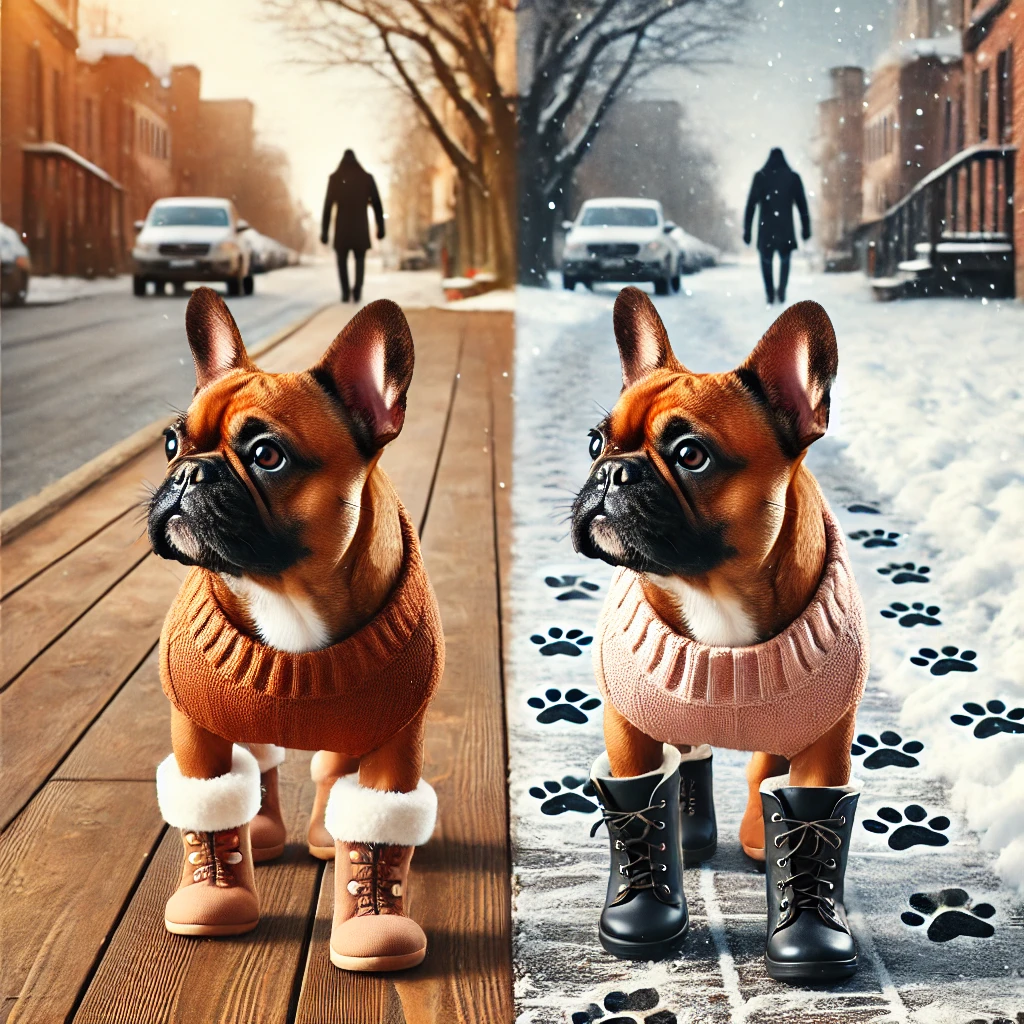
Your French Bulldog’s paws are in constant contact with the world—from hot pavement to icy sidewalks, sharp gravel to dusty trails. Despite being tough, paws are vulnerable to cuts, burns, dryness, and infections. Proper paw care is essential for your Frenchie’s comfort, mobility, and long-term health.
Here’s how to protect and care for your French Bulldog’s paws in every season.
1. Understand the Structure and Sensitivity of Dog Paws
Paws are made up of pads, nails, and skin that provide traction, absorb shock, and protect bones and joints. But they also contain nerve endings, making them sensitive to extreme temperatures and injury.
French Bulldogs have compact, muscular paws—but they still need protection from environmental hazards, especially because of their relatively low activity level, which can reduce natural wear.
2. Hot Pavement and Summer Protection
Pavement heats up quickly in the sun, and dogs absorb that heat directly through their paw pads. If it’s too hot for you to walk barefoot, it’s too hot for your dog.
Tips:
- Walk your Frenchie early in the morning or late in the evening when surfaces are cooler.
- Use paw wax or protective booties to form a barrier against heat.
- Stick to grassy or shaded paths during summer.
- Test the pavement with your hand: place the back of your hand on the surface for 5 seconds—if it’s too hot, wait or find a safer path.
Burned pads can blister and peel, causing pain and limiting mobility.
3. Cold Weather and Winter Care
Cold temperatures, ice, and road salt can all harm your French Bulldog’s paws. Salt and chemicals used to melt snow can cause burns, while ice buildup between the toes can cause cracks and cuts.
Winter paw care:
- Rinse or wipe your Frenchie’s paws after each walk.
- Apply paw balm or pet-safe petroleum jelly before and after walks.
- Consider insulated dog boots if your area gets snow or freezing temperatures.
- Trim fur between the paw pads to reduce ice clumping.
Look out for signs of discomfort, like lifting paws off the ground or refusing to walk.
4. Year-Round Grooming for Paw Health
Regular grooming helps keep paws clean, healthy, and free from irritation.
Include in your routine:
- Trim nails every 3–4 weeks (or as needed)
- Clean between toes and pads to remove debris
- Check for thorns, pebbles, or splinters after walks
- Moisturize pads with dog-safe products if they appear dry or cracked
If nails click on the floor, it’s time for a trim. Long nails can affect your dog’s posture and gait.
5. Choose Safe Surfaces for Play and Walks
Hard, rough surfaces like asphalt and gravel can wear down paw pads over time, especially for a small, muscular dog like a Frenchie.
Safer alternatives:
- Grass, turf, or dirt trails
- Indoor flooring with rugs or foam mats
- Dog parks with soft ground or designated walking paths
Avoid walking your Frenchie on surfaces with visible litter, glass, or sharp debris.
6. Hydration Supports Paw Health
Just like dry skin, dehydrated dogs can develop dry, cracked paws. Keeping your Frenchie well-hydrated helps maintain healthy, flexible paw pads.
Hydration tips:
- Always provide clean, fresh water at home and on walks.
- Use portable water bottles with built-in bowls for outdoor adventures.
- Monitor for signs of dehydration: dry gums, lethargy, thick saliva.
Hydrated paws are less prone to cracking and soreness.
7. Know the Signs of Paw Problems
French Bulldogs are stoic but may show signs when their paws are uncomfortable or injured.
Watch for:
- Limping or favoring a paw
- Constant licking or chewing of the feet
- Redness or swelling
- Bleeding, cracking, or blackened pads
- Bad odor (may indicate infection)
If any of these symptoms appear, consult a veterinarian promptly. Infections and injuries can worsen quickly without proper care.
8. Use Natural Remedies with Caution
Some owners use DIY treatments like coconut oil or aloe vera to moisturize paws. While these can be safe, not all home remedies are dog-friendly.
Use only:
- Dog-specific balms or oils recommended by your vet
- Natural paw butters made for canine use
- Unscented products without essential oils (some are toxic to dogs)
Never apply human creams or medicated ointments without veterinary approval.
9. Consider Dog Booties for Protection
Dog booties can protect against heat, cold, chemicals, and rough terrain—but French Bulldogs may resist wearing them at first.
Tips for success:
- Choose lightweight, flexible boots with non-slip soles.
- Introduce them slowly indoors with treats and praise.
- Make wearing the boots a positive experience by playing while they wear them.
- Ensure a snug but comfortable fit to avoid slipping or rubbing.
Even short walks in extreme weather can justify the use of paw protection.
10. Make Paw Checks a Habit
Integrate paw inspections into your daily or weekly routine. Not only does this help catch issues early, but it builds trust and desensitizes your Frenchie to being handled.
- Check after walks, especially if you were on rough or unfamiliar terrain.
- Include paw checks during grooming or playtime.
- Reward your dog with praise or a small treat for calm behavior.
This small habit can prevent big problems.
Conclusion: Happy Paws, Happy Pup
Your French Bulldog’s paws carry them through life—literally. With regular care, seasonal protection, and mindful attention, you can keep those little feet healthy and pain-free year-round. From booties to balms, the right routine makes all the difference in your Frenchie’s comfort and mobility.