
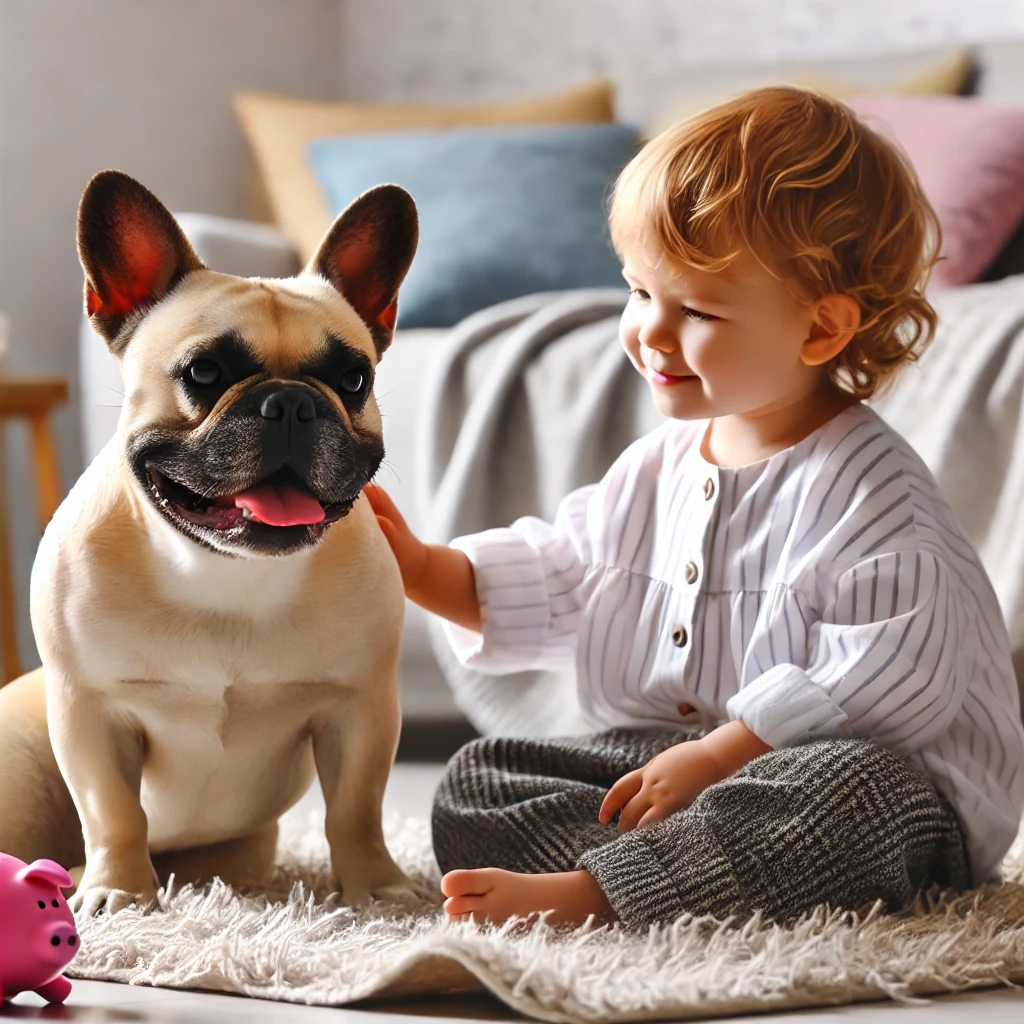
French Bulldogs are affectionate, sociable, and typically great with kids. Their calm nature and compact size make them ideal family companions. But like any relationship, successful interaction between children and dogs depends on proper introductions, respectful behavior, and supervision—especially in the early stages.
Whether you’re bringing a new French Bulldog into a home with kids or introducing your child to a dog for the first time, here’s how to make it a smooth and safe experience for everyone involved.
1. Understand the French Bulldog’s Temperament
Frenchies are known for their loving, people-oriented personalities. They’re generally patient and enjoy being around their human family. However, they’re also prone to sensitivity—they don’t respond well to loud noises, rough handling, or chaotic environments.
While they aren’t typically aggressive, they can become anxious or defensive if they feel unsafe or overwhelmed, especially in the presence of small, unpredictable children.
2. Teach Children How to Interact with a Dog
One of the most important steps in a successful introduction is preparing the child—not just the dog. Children should be taught what is and isn’t appropriate when interacting with a dog.
Teach kids to:
- Approach the dog calmly and slowly
- Offer a flat palm for the dog to sniff
- Avoid pulling ears, tail, or fur
- Never disturb a sleeping or eating dog
- Use quiet voices and avoid screaming
You can even do a little “training” beforehand using stuffed animals or videos to demonstrate good dog manners.
3. Make the First Meeting Calm and Controlled
Choose a neutral, calm environment for the introduction—ideally somewhere your Frenchie feels safe, but that isn’t overstimulating.
Tips for the first meeting:
- Keep your French Bulldog on a leash, but relaxed, with slack.
- Allow the dog to approach the child at their own pace—don’t force interaction.
- Keep the child seated or kneeling, which feels less intimidating to the dog.
- Offer treats when your Bulldog remains calm or responds positively.
If either the dog or the child seems fearful or overstimulated, pause and try again later.
4. Supervise All Interactions at First
Even the best-behaved dogs and most respectful children can make mistakes. Always supervise interactions, especially with younger kids.
What to watch for:
- Signs of stress in your dog: yawning, lip licking, turning away, growling
- Signs of excitement in the child: sudden running, squealing, loud play
- Resource guarding: dogs may become possessive of toys, food, or resting spots
Create boundaries such as no touching the dog while eating or sleeping, and separate them if one needs a break.
5. Use Positive Reinforcement
Rewarding your French Bulldog during interactions with children will help them associate kids with positive experiences.
You can:
- Offer treats for calm behavior when the child is nearby
- Praise your dog for allowing gentle petting or ignoring loud noises
- Reward your child with praise or stickers for respectful behavior
Positive reinforcement builds trust and helps reduce anxiety for both dog and child.
6. Establish Safe Spaces for the Dog
It’s essential your French Bulldog has a quiet, child-free space where they can go when they need a break.
Ideal features:
- A crate or bed in a low-traffic area
- Toys or a chew for relaxation
- A “no kids allowed” rule that’s strictly followed
Teaching children to respect the dog’s space helps prevent stress and builds mutual respect.
7. Monitor Long-Term Behavior and Progress
Every dog and child pair is different—some bond instantly, others need more time. Watch how the relationship develops and adjust as needed.
Keep an eye on:
- Whether your Frenchie seems relaxed around the child most of the time
- Whether the child is maintaining boundaries and following rules
- Any incidents of snapping, growling, or fear-based behavior
If challenges persist, consult a professional dog trainer or behaviorist for additional help.
Conclusion: A Lifelong Bond Built on Respect
Introducing your French Bulldog to children isn’t just about managing a moment—it’s about creating the foundation for a lifelong friendship. With patience, supervision, and education, you can help both dog and child understand each other and build a respectful, loving relationship. When done right, this bond becomes one of the most rewarding parts of family life—for both human and pup.